

Assessment, Validation & Certification System
I designed a scalable assessment and validation system that reinforced learning, measured performance, and ensured readiness across employees, clients, and technicians.
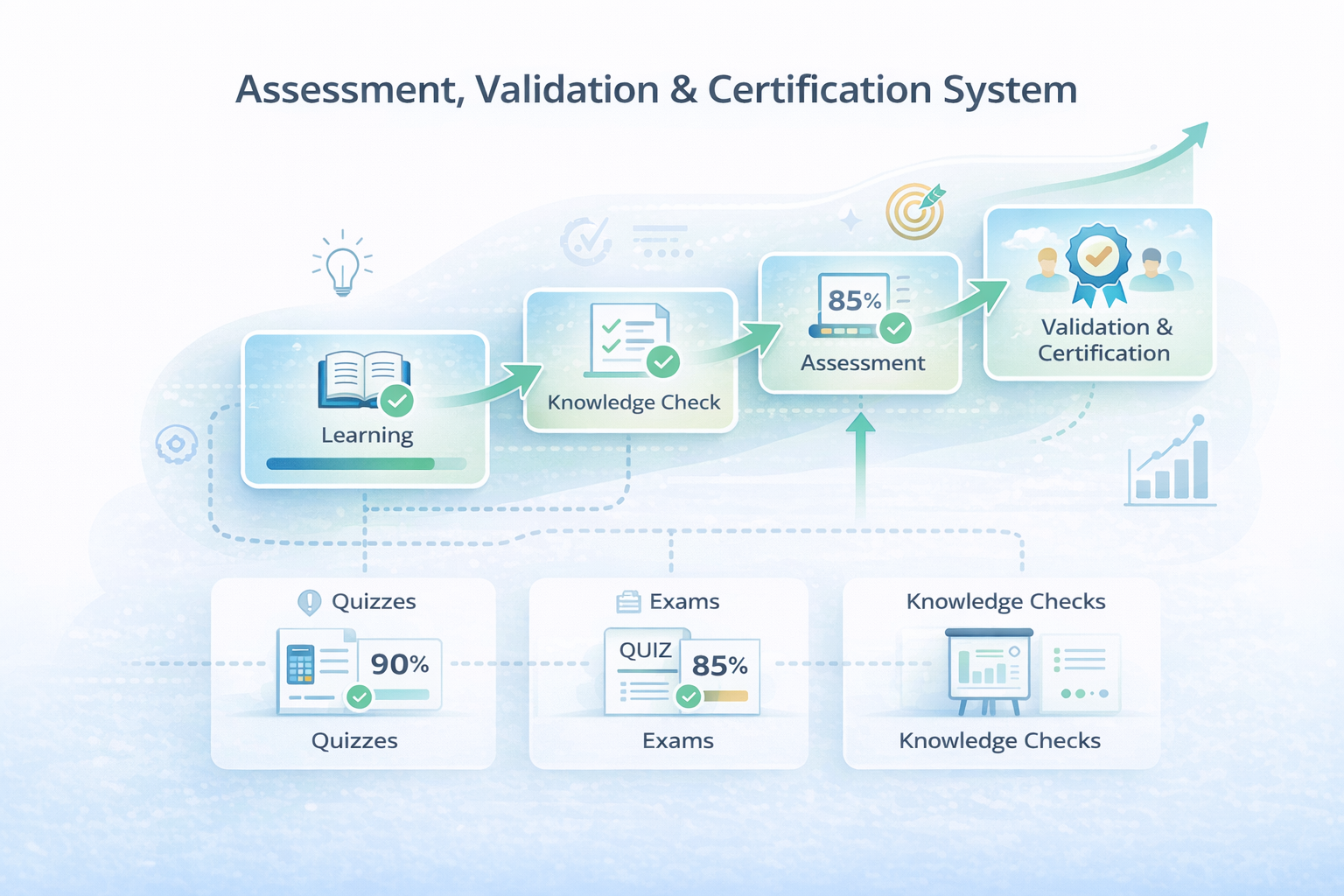
Assessment System Overview
This visual represents a structured system for validating learning through quizzes, knowledge checks, exams, and progression-aligned assessments designed to reinforce knowledge and support real-world readiness.
Introduction
Training alone does not guarantee readiness. As learning expanded across technicians, internal teams, client-facing employees, and workshops, there was a growing need for a consistent way to validate understanding, reinforce key concepts, and ensure that individuals were prepared to apply what they learned.
To address this, I designed and implemented a multi-level assessment and validation system that supported learning across different audiences and environments. The goal was to move beyond completion-based training and establish a more structured approach to measuring knowledge, reinforcing learning, and supporting progression.
Impact
Reinforced learning across technicians, employees, clients, and workshop participants
Introduced structured validation through quizzes, knowledge checks, exams, and progression-aligned assessments
Supported promotion and readiness decisions with more measurable criteria
Increased consistency in how learning was evaluated across programs
Improved reporting visibility through standardized assessment design and templates
Strengthened the connection between training completion and demonstrated performance readiness
Project Overview
Project Type: Assessment Design, Learning Validation, Certification Strategy, Workforce Development, Training Measurement, Performance Readiness
Tools / Systems: Docebo LMS, quizzes, knowledge checks, exams, certification logic, workshop assessments, eLearning validation points, SOPs, standardized templates
The Challenge
As training programs expanded, there was no single, consistent system for validating whether learners had truly understood and retained key knowledge. Different audiences required different forms of reinforcement and measurement—from technician progression and promotion readiness to product knowledge validation for employees and clients, as well as knowledge checks within workshops.
A scalable approach was needed to validate learning at multiple points, reinforce key concepts, and support more consistent decisions about readiness and progression.
My Role
I led the design of the assessment and validation system across multiple learning environments. This included identifying where validation was needed, structuring quizzes, knowledge checks, exams, and progression-aligned assessments, and aligning them with learning paths, workshops, product training, and technician development.
I also developed standardized SOPs and reusable templates to ensure consistency in assessment design and enable structured reporting across programs.
The Solution
I designed and implemented a structured assessment and validation system that supported reinforcement, measurement, and readiness across a variety of learning experiences.
This system combined assessment design with standardized processes to ensure consistency, scalability, and reporting across programs.
Key components included:
quizzes for employees and client-facing learners to reinforce product knowledge
knowledge checks embedded within workshops and learning experiences to support retention
promotion and progression exams aligned to technician development
validation points tied directly to skill development and readiness
certification-related assessment logic connected to structured learning paths
standardized SOPs and templates to ensure consistent design and enable detailed reporting
The result was a more intentional system for measuring learning and supporting decisions about readiness, progression, and application.
How It Worked
1. Reinforced learning during training
Quizzes and knowledge checks were embedded throughout learning experiences to strengthen retention and confirm understanding before progression.
2. Validated product knowledge across audiences
Assessment tools were used across technicians, employees, and clients, ensuring consistent validation of product knowledge and system understanding.
3. Supported technician progression
Promotion-aligned exams and validation points ensured advancement decisions were supported by demonstrated knowledge rather than informal judgment.
4. Embedded validation into workshops
Knowledge checks within workshops reinforced key concepts, increased engagement, and provided visibility into learner understanding in real time.
5. Integrated into the broader learning ecosystem
Because onboarding, LMS, and competency systems were already being structured, assessments were integrated into a unified learning ecosystem rather than functioning as isolated components.
6. Standardized assessment design and reporting
SOPs and reusable templates ensured consistency in how assessments were created, delivered, and measured. This also enabled structured reporting, providing clearer visibility into learner performance and progress across programs.
Results
Increased consistency in how learning was measured across programs and audiences
Reinforced key concepts through strategically placed validation points across learning experiences
Supported more measurable, criteria-based readiness and progression decisions
Expanded assessment strategy across technicians, employees, clients, and workshops
Improved visibility into learner performance through standardized reporting
Strengthened alignment between learning experiences and real-world application
Why This Matters
This project reflects my approach to assessment as more than testing. I use validation as part of the learning experience itself—to reinforce knowledge, measure readiness, and support better decisions about progression and performance.
This system connected training to demonstrated understanding across multiple audiences, making learning measurable, scalable, and directly tied to real-world performance.