


OVERVIEW
A leadership training initiative for C-level executives and directors across the organization.
Leadership Workshops- Codifying Culture
A practical, research-based leadership workshop built to help senior leaders define their values and embed them into real, everyday systems—strengthening culture from the inside out.
Audience: Executive-level leadership
Responsibility: Instructional Design, eLearning Development, Workshop Facilitation
Tools Used: Articulate Rise 360, Docebo LMS
Problem and Solution
Before this initiative, our company’s values were essentially invisible. They weren’t clearly communicated, and they didn’t show up in our systems—leaving employees unsure of what those values looked like in action. Leaders were relying on instinct, not alignment.

To bridge that gap, I designed a multi-session leadership workshop for our CEO, COO, Vice Presidents, and Directors across nine departments. The focus: define our core values, connect them to leadership behaviors, and embed them into our systems—onboarding, performance reviews, recognition, and more. This wasn’t just about defining culture—it was about operationalizing it.
What Worked
The course was delivered virtually using our LMS’s Instructor Led Training feature, which allowed leaders to join via video conference. Each session was supported by an interactive Rise 360 course, which guided participants through the content in real time and created a consistent, replicable learning experience that any facilitator could lead.
Key elements that made the design effective:
The Rise course content anchored the experience, keeping participants focused and aligned across sessions.
Live discussions sparked meaningful engagement, helping leaders surface unspoken assumptions and reflect on their leadership practices.
Micro-interactions and knowledge checks reinforced learning and made abstract ideas stick.
Weekly reflection prompts helped leaders apply concepts immediately in their teams.
Downloadable summary sheets gave participants a quick-reference tool to use after the sessions.
“Putting It Into Practice” recaps wrapped up each session with practical steps for real-world implementation.

By the end of each session, leaders weren’t just participants—they were energized champions. They began making real-time adjustments and applying the concepts within their departments the same week.
Measurable Impact
This initiative sparked tangible, executive-level change.
For the first time, our entire senior leadership team examined how well our values were embedded in the systems we use daily—and took action:
Onboarding processes were updated to reflect core values.
Performance reviews began tying feedback to specific leadership behaviors.
Recognition shifted to celebrate actions that clearly aligned with stated principles.
Our core values were communicated clearly and publicly, shaping a more unified, intentional culture.
This project didn’t just shift conversations—it shaped how we lead. It became the turning point in how culture was understood, practiced, and scaled across the company.

You may also like…
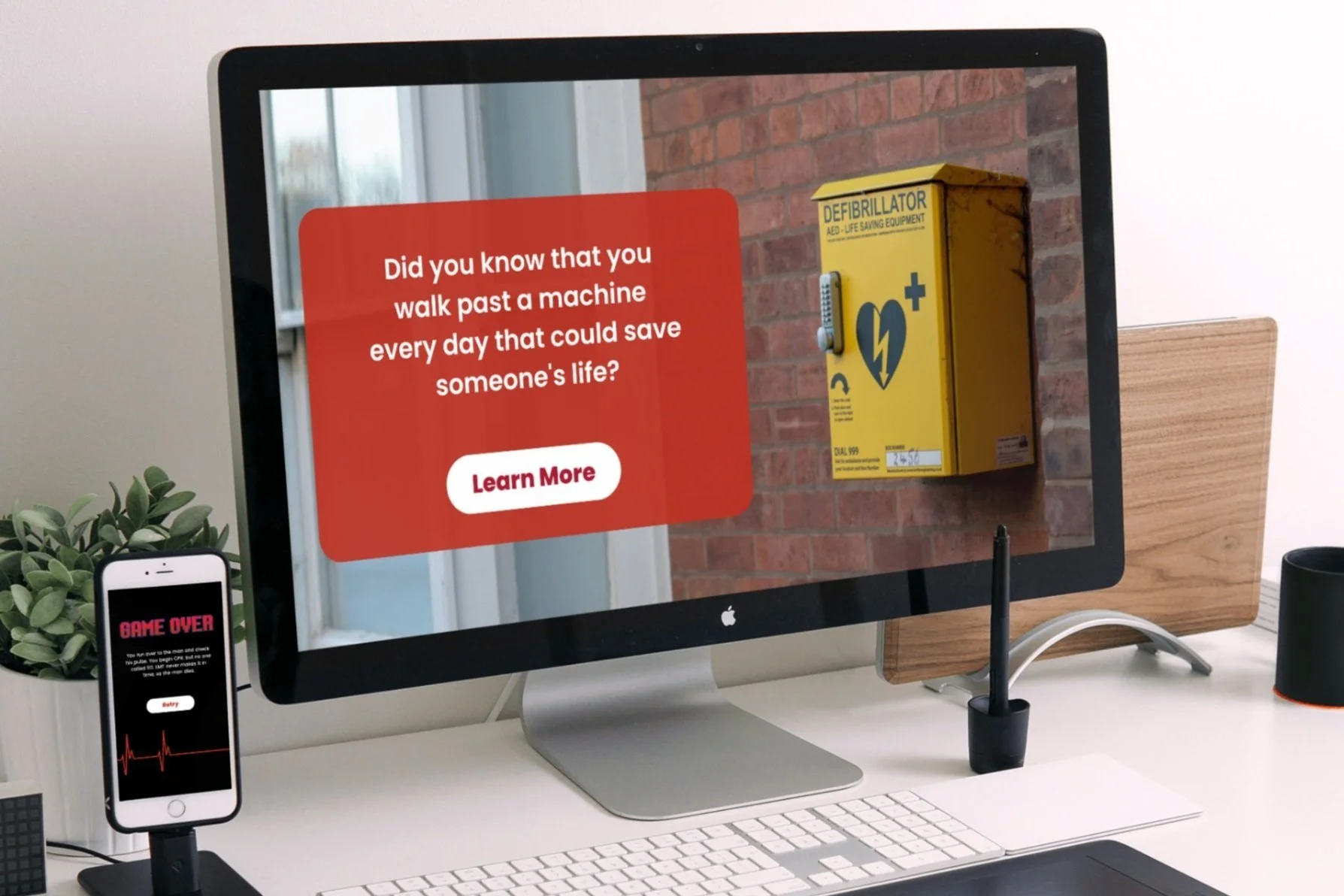
Workplace Safety and CPR Trianing
This scenario-based eLearning uses gamification to help employees learn how to respond with an AED during a cardiac emergency.
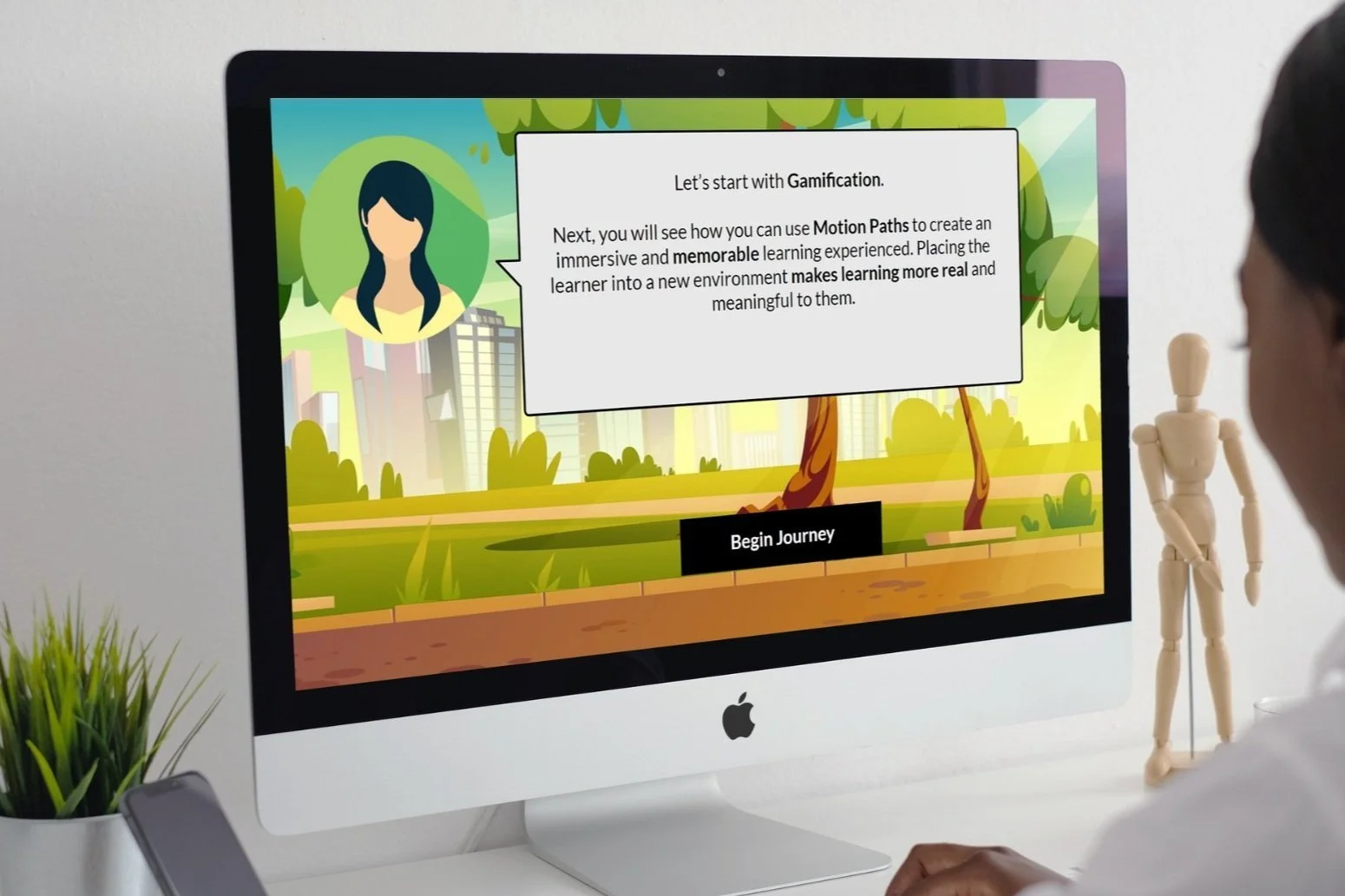
Gamified Instructional Designer eLearning Experience
Live workshop material that uses gamification and hands-on challenges to help new instructional designers practice tools like motion paths and branching in real time.
AI Workflow
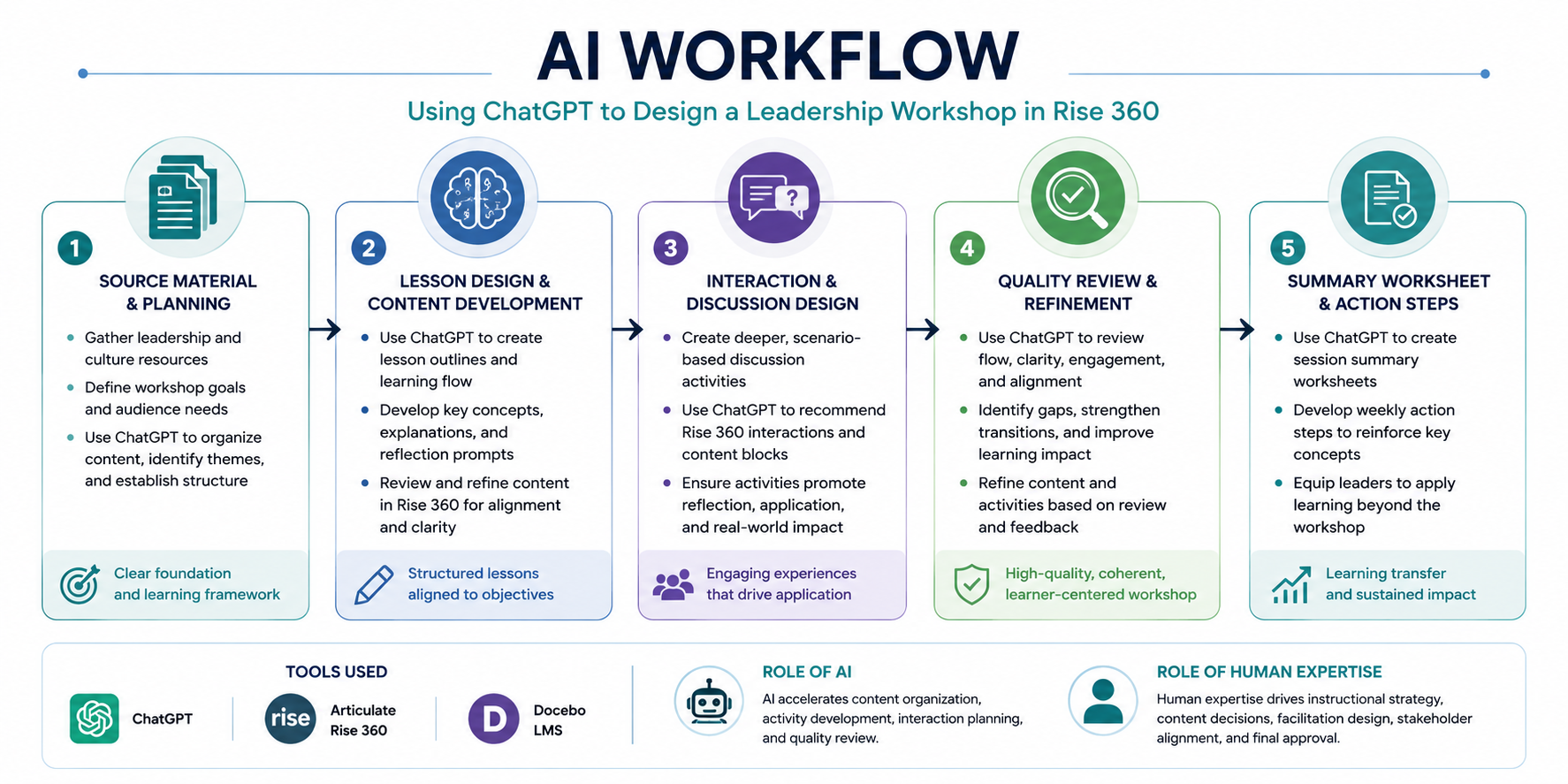
To accelerate development while maintaining instructional quality, I used ChatGPT throughout the design process as a collaborative instructional design partner. Rather than generating an entire course at once, I developed the workshop one lesson at a time, using AI to help organize content, structure learning experiences, refine activities, and support review while applying instructional design judgment at every stage.
A key part of this workflow was creating a reusable prompt library and AI development SOP. The prompt library included prompts for lesson planning, discussion design, Rise 360 block selection, scenario development, reflection activities, quality review, summary worksheets, and weekly action steps. This made the workflow more consistent, repeatable, and easier to apply across future leadership workshops.
Source Material & Planning
The process began with leadership and culture resources, organizational context, workshop goals, and audience requirements. I provided this information to ChatGPT and used structured prompts to organize the learning framework, identify major themes, and establish the lesson sequence.
Prompt Library & SOP
To make the workflow repeatable, I developed a prompt library and standard process for using AI during course development. The SOP outlined when to use AI, how to structure prompts, how to review AI-generated drafts, and how to apply instructional standards before adding content into Rise 360.
Prompt categories included:
Lesson structure and learning flow
Discussion and reflection prompts
Scenario-based activities
Rise 360 interaction/block recommendations
Plain language and clarity review
Quality assurance against instructional standards
Summary worksheets and weekly practice steps
Lesson Design & Content Development
For each lesson, ChatGPT helped create an initial content structure, including key concepts, learning flow, discussion activities, and opportunities for reflection. I reviewed every section and refined the content as it was built in Rise 360 to ensure alignment with business objectives, leadership expectations, and adult learning principles.
Interaction & Discussion Design
One of the most valuable uses of AI was improving discussion activities and learner engagement. Rather than relying on surface-level questions, I prompted ChatGPT to create discussions that required leaders to revisit the content, reflect on their own experiences, apply concepts to their teams, and explore how ideas could be implemented within the organization.
AI was also used to recommend the most appropriate Rise 360 interactions and content blocks for different types of information, helping create a more engaging and varied learning experience.
Quality Review & Reinforcement
Before sharing the workshop with stakeholders, I used ChatGPT to conduct a final quality review focused on clarity, flow, engagement, alignment with learning objectives, and practical application. AI also supported the creation of reinforcement materials, including session summary worksheets and weekly action steps designed to help leaders apply concepts beyond the workshop.
Role of AI
AI accelerated content organization, activity development, interaction planning, quality review, and reinforcement material creation. Human expertise remained responsible for instructional strategy, content decisions, facilitation design, stakeholder alignment, application to organizational context, and final approval.