

LMS Implementation — Micrologic University
I led the implementation and design of a centralized Learning Management System that enabled scalable training, structured learning paths, and consistent delivery across internal teams and clients.
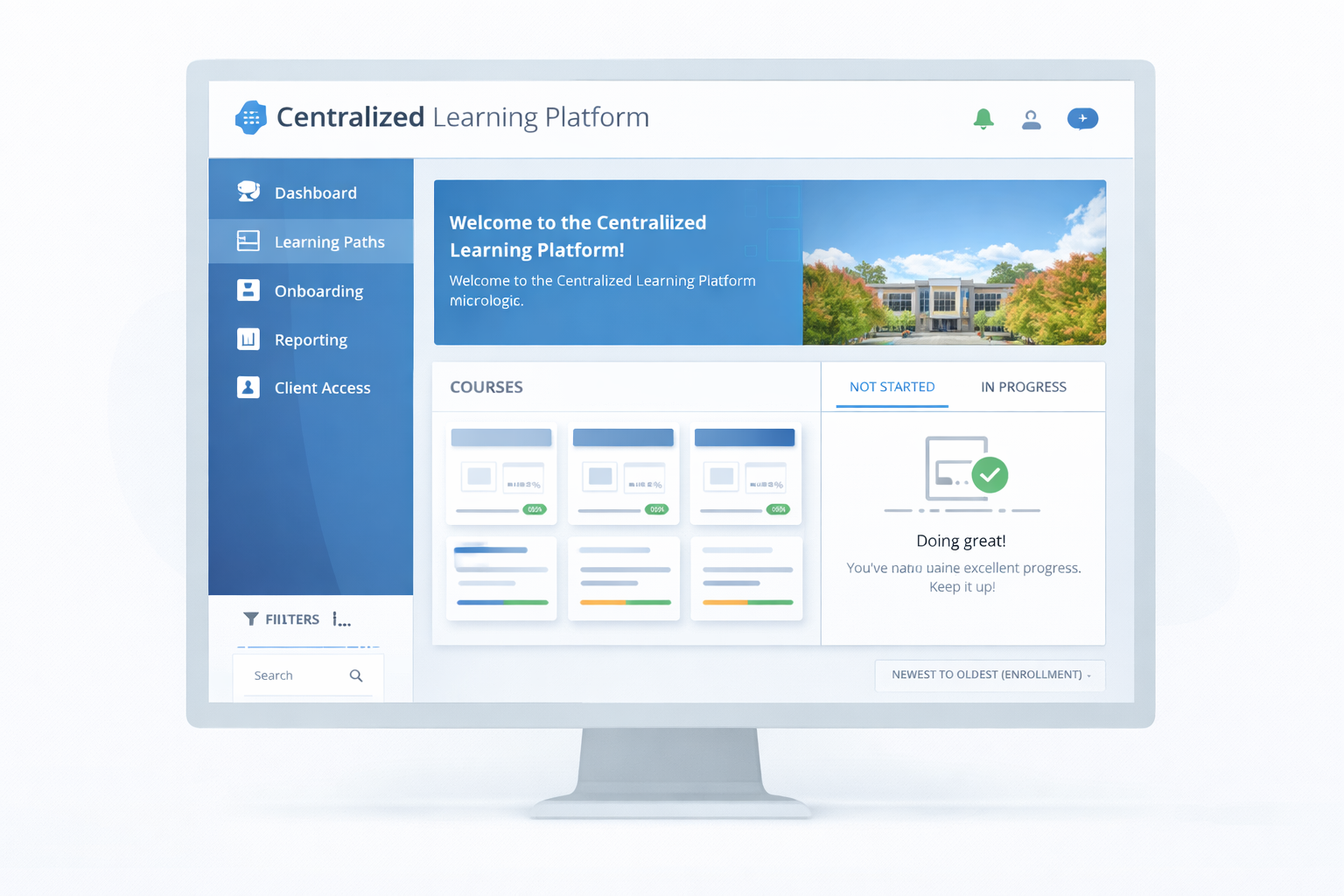
LMS Platform Overview
This visual represents a centralized learning management system designed to support onboarding, structured learning paths, assessments, reporting, and client-facing training in one unified environment.
Introduction
Training content, onboarding, and documentation were previously distributed across different sources, making it difficult to manage, scale, and deliver learning consistently across teams and clients.
To address this, I led the implementation and design of a centralized LMS that brought training into a single, structured system. The goal was to create a scalable platform that could support onboarding, ongoing learning, and client education while improving consistency and visibility across the organization.
Impact
Centralized training for internal teams and clients
Enabled scalable and consistent learning delivery
Supported client onboarding and product adoption
Established the foundation for a unified learning ecosystem
Project Overview
Project Type: LMS Implementation, Learning Ecosystem Design, Workforce Development, Training Strategy, Client Education
Tools / Systems: Docebo LMS, eLearning, learning paths, reporting, certification logic, user group structures, content management systems
The Challenge
Before implementing the LMS, training was fragmented and difficult to manage. Learning content, onboarding materials, and documentation were spread across different formats and locations, making it harder to deliver a consistent experience and track progress effectively.
There was a need for a centralized system that could organize learning, support structured training paths, and provide visibility into learner progress across both internal teams and clients.
My Role
I led the implementation and design of the LMS environment, including structuring learning paths, organizing content, defining user groups, and aligning the platform to support onboarding, training, and client-facing learning initiatives.
The Solution
I implemented and configured a centralized LMS that organized learning into structured paths, supported role-based training, and enabled scalable delivery across different audiences.
The LMS was designed to support:
structured onboarding and learning paths
centralized access to training and documentation
role-based learning experiences for internal teams and clients
assessments and certification tracking
reporting and visibility into learner progress
The result was a unified platform that streamlined training delivery and made learning more accessible, organized, and scalable. This positioned the LMS as the central system supporting onboarding, training, assessment, and ongoing development.
How It Worked
1. Centralized learning content
I consolidated training materials into a single platform, making it easier for learners to access consistent and up-to-date information.
2. Created structured learning paths
Learning paths were designed to guide users through onboarding and ongoing development in a clear and organized way.
3. Enabled role-based learning
The LMS was structured to support different user groups, ensuring that content was relevant to each role and audience.
4. Implemented assessments and certification tracking
I incorporated quizzes, knowledge checks, and certification milestones to support validation and progress tracking.
5. Introduced reporting and visibility
The platform provided insight into learner progress, helping teams better understand training completion and engagement.
Results
Improved consistency in how training was delivered across teams and clients
Increased accessibility of learning and documentation through a centralized platform
Enabled visibility into learner progress, completion, and engagement
Supported onboarding, upskilling, and ongoing development within one system
Created a scalable foundation for future learning initiatives
Why This Matters
This project reflects my approach to building learning systems that go beyond individual courses. I focus on creating centralized platforms that support structured learning, improve accessibility, and enable organizations to scale training effectively.
This LMS became the foundation that supported onboarding, competency development, assessment, and ongoing learning across the organization.