💡 Mastering the First Client Meeting: How Talent Development Professionals Uncover the Real Training Need
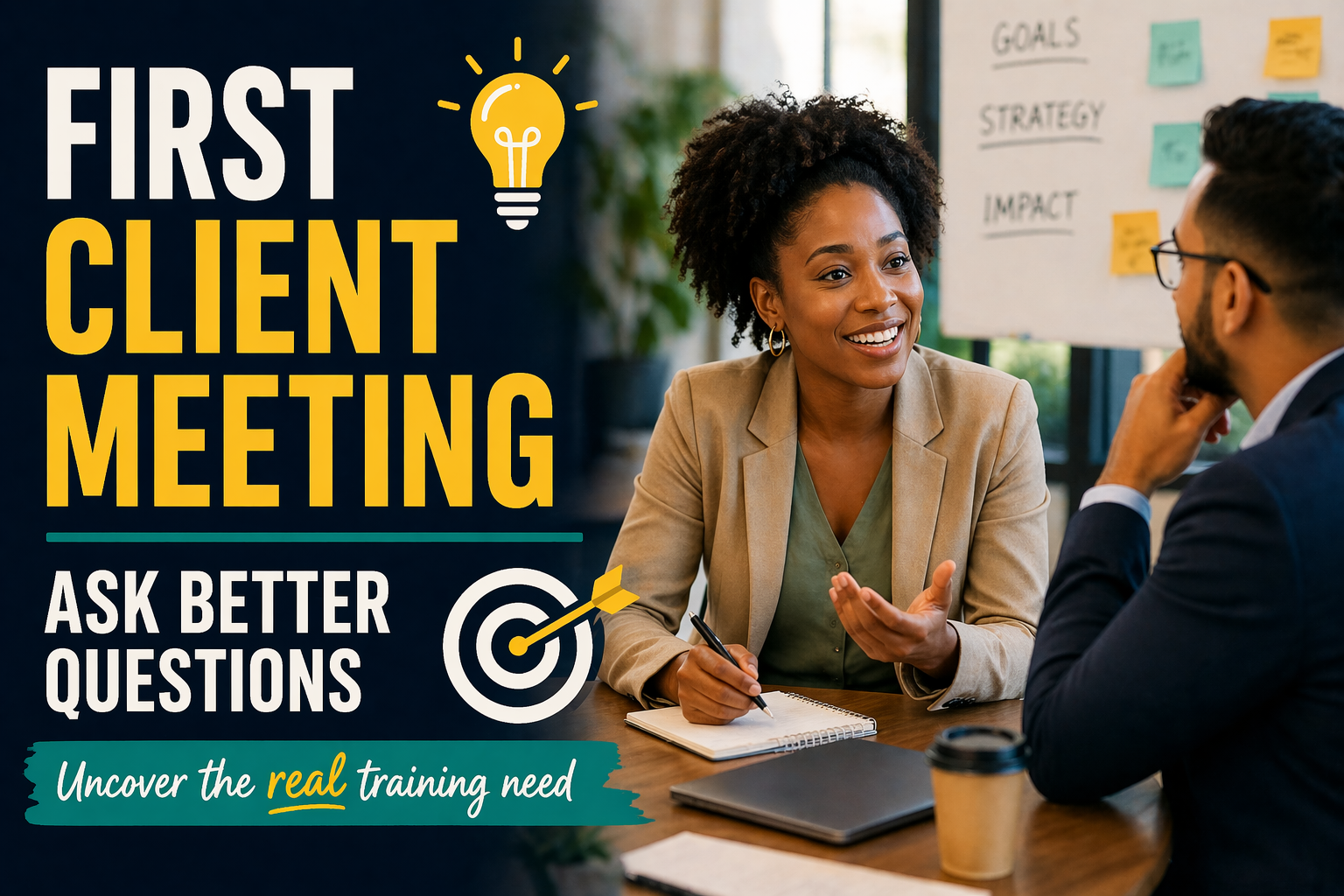
The first time you sit down with a new client or company, the conversation sets the tone for the entire partnership. This isn’t just about gathering logistics or hearing their wish list — it’s about uncovering the story behind the training request. It’s about asking the kind of questions that reveal the real challenges, the hidden gaps, and the business goals that matter most.
In Talent Development, your expertise starts long before a course is designed or a facilitator is booked. It begins with curiosity — the kind that digs deeper than, “What training do you want?”
To make your first client meeting even more productive, I’ve created a worksheet that guides you through the right questions and helps you capture the answers in one place.
Start with the Big Picture
Before you even think about delivery formats or course outlines, you need to understand why this training matters. Ask about the organization’s current priorities, how they define success, and where this initiative fits into their strategy.
A vague “we just need customer service training” might actually be rooted in declining retention rates or competitive pressure in their market. When you connect training to tangible business outcomes — revenue, efficiency, compliance, safety — you position yourself as a partner in achieving results, not just a content provider.
Ask:
What are your organization’s top priorities right now?
How does this training align with your business strategy?
What business problem are you trying to solve?
Why it matters:
If the training request doesn’t clearly connect to strategic goals, it risks being deprioritized, underfunded, or ignored after launch.
What to listen for:
Direct ties to revenue growth, cost savings, efficiency improvements, safety, or compliance.
Leadership language — terms like “strategic initiative,” “quarterly objective,” or “performance metric” signal buy-in.
If the answers are vague, you may need to help them articulate the connection.
Get to Know the Learners
Every successful training program starts with a deep understanding of who it’s for. Who are the participants? What do their day-to-day roles look like? Are they seasoned professionals or new hires still learning the ropes?
Just as important: How do they prefer to learn? A field-based team working outdoors all day will have very different needs than office-based analysts. Factors like language, accessibility, and even generational learning styles can make or break engagement.
Ask:
Who will be participating in the training?
What’s their current skill or knowledge level?
How do they typically prefer to learn?
Why it matters:
A course that’s too advanced, too basic, or in the wrong format will fail no matter how well it’s designed.
What to listen for:
Job roles, tenure, and day-to-day tasks.
Barriers like literacy level, tech access, or language needs.
Learning preferences — some groups thrive with microlearning, others need hands-on workshops.
Find the Gaps
Clients often come to you with a symptom, not the cause. Low sales numbers might be blamed on “closing skills,” when in fact the issue is product knowledge or confidence in handling objections.
Ask what’s been tried before and what happened as a result. Review performance metrics, employee feedback, and manager observations to pinpoint where the real gaps lie. This is where your diagnostic skills pay off — solving the right problem from the start.
Ask:
What skills, behaviors, or knowledge are missing?
What’s been tried before, and how did it work?
Why it matters:
You can’t fix what you can’t define. This helps you focus on outcomes instead of just delivering content.
What to listen for:
Performance metrics (sales conversion rates, error rates, customer satisfaction scores).
Trends in feedback from managers or employees.
Root causes versus symptoms — e.g., low sales might be due to poor product knowledge, lack of confidence, or inadequate tools.
Leverage What They Already Have
Many organizations have a goldmine of resources hidden away — existing training materials, manuals, videos, or internal subject matter experts. Tapping into these assets can save budget, ensure brand consistency, and shorten your development timeline.
However, don’t assume existing materials are ready to use. Ask when they were last updated, whether they align with current policies, and if employees actually use them.
Ask:
Do you already have training materials or SMEs we can leverage?
Are there compliance or brand guidelines we need to follow?
Why it matters:
Leveraging existing resources can reduce costs and speed up delivery — and ensures your program aligns with company standards.
What to listen for:
Up-to-date materials you can adapt rather than rebuild.
SMEs who can provide not only technical accuracy but also insider tips and real-world scenarios.
Work Within Real-World Constraints
One of the fastest ways a training program fails is by ignoring operational realities. If the busiest season is about to start, expecting employees to complete a two-day workshop may be unrealistic.
Ask about peak work periods, shift schedules, and whether the training will be mandatory or voluntary. This helps you shape a program that’s accessible without disrupting critical business operations.
Ask:
What’s your preferred delivery method?
How much time can learners realistically dedicate to training?
Will participation be mandatory or voluntary?
Why it matters:
Even the best-designed course will flop if it doesn’t fit the reality of the learners’ schedules or work environment.
What to listen for:
Operational constraints — busy seasons, shift schedules, travel.
Tech limitations that might rule out certain formats.
Mandatory training may require stronger engagement strategies.
Understand the Tech Environment
Technology can be a powerful enabler — or an unexpected barrier. Find out what learning platforms they use, whether they track completion or performance data, and how employees will access the training.
For example, if they plan to deploy interactive eLearning but half the workforce only has a shared kiosk, you’ll need to adjust your approach. Knowing this now avoids costly redesigns later.
Ask:
Do you have an LMS or platform?
How will learners access the training (desktop, mobile, on-site kiosk)?
Why it matters:
You need to know what tech environment you’re designing for — and whether it supports the kind of interactivity or tracking you have in mind.
What to listen for:
LMS capabilities (xAPI, SCORM, reporting dashboards).
Integration with other systems (HRIS, CRM).
Learner access challenges — e.g., field workers without regular internet.
Define What Success Looks Like
If you can’t measure success, you can’t prove value. Ask how they’ll know the training worked. Is it improved productivity, fewer safety incidents, higher customer satisfaction scores?
This is also the moment to discuss evaluation methods. Will they collect learner feedback, track on-the-job behavior changes, or measure ROI in dollars saved or earned? Aligning on this early means your program can be built to deliver — and demonstrate — results.
Ask:
How will we know if this training worked?
What metrics matter most to you?
Why it matters:
Clear success criteria keep the project focused and give you a benchmark for ROI reporting.
What to listen for:
Alignment with Kirkpatrick’s Level 3 (behavior change) and Level 4 (business results).
Specific metrics like productivity gains, reduced safety incidents, or higher customer satisfaction.
Whether leadership already has measurement tools in place.
Talk Numbers
Money shapes scope. The sooner you understand the available budget, the sooner you can design realistic options. Some clients might not know the exact number yet, but you can still explore whether a phased rollout or pilot program could make the investment more manageable.
Being transparent about costs builds trust and sets you up for smoother approvals down the road.
Ask:
What’s the budget?
Are you open to a phased rollout?
Why it matters:
Budget shapes scope. Knowing it early avoids designing something they can’t afford.
What to listen for:
Flexibility — phased or pilot programs can get results faster and build a case for additional funding.
Red flags — a “no budget” answer may mean this is more of an exploratory conversation.
Clarify Who’s Involved
Projects slow down — or stall completely — when the decision-making process isn’t clear. Identify the key stakeholders, who has final approval, and how they prefer to receive updates.
A weekly status email might work for some, while others prefer milestone presentations. Matching their communication style keeps the project moving.
Ask:
Who will approve content and sign off on deliverables?
How should we communicate progress?
Why it matters:
Projects stall when stakeholders aren’t identified early or communication isn’t clear.
What to listen for:
Decision-making structure (flat vs. layered approvals).
Preferred communication cadence (weekly check-ins, milestone reviews).
Spot the Risks Early
Every training initiative has potential roadblocks: leadership changes, budget cuts, competing projects, or a history of failed training efforts.
By asking about these risks early, you can create contingency plans and manage expectations. This also shows the client you’re thinking like a strategic partner, not just an order-taker.
Ask:
What might prevent this training from succeeding?
Are there competing initiatives that might affect participation?
Why it matters:
Spotting risks early gives you time to mitigate them.
What to listen for:
Leadership changes, upcoming reorganizations, budget freezes.
Previous training initiatives that failed — and why.
The Bottom Line
The first client meeting is your opportunity to demonstrate that you’re more than a training provider — you’re a consultant who can connect learning to business impact. The right questions uncover more than just the content needs; they reveal the cultural, operational, and strategic context that will determine success.
When you leave that meeting, you shouldn’t just have a list of topics. You should have a clear vision of the problem you’re solving, the people you’re serving, and the path to measurable results.
Here’s to great first meetings! 💬✨