The Most Exciting Learning & Development Technologies to Watch in 2026
Learning and Development is no longer just about delivering content. For years, success in L&D meant building courses, launching programs, and tracking completion rates. That model is quickly becoming outdated.
In 2026, the most exciting technologies are not focused on content delivery—they are focused on practice, feedback, personalization, and performance.
What’s emerging now is a shift toward learning that is continuous, adaptive, and deeply connected to real-world application. The tools driving this shift are not just making training more efficient—they are redefining what effective learning looks like.
Below are five of the most impactful technologies shaping the future of Learning & Development right now.
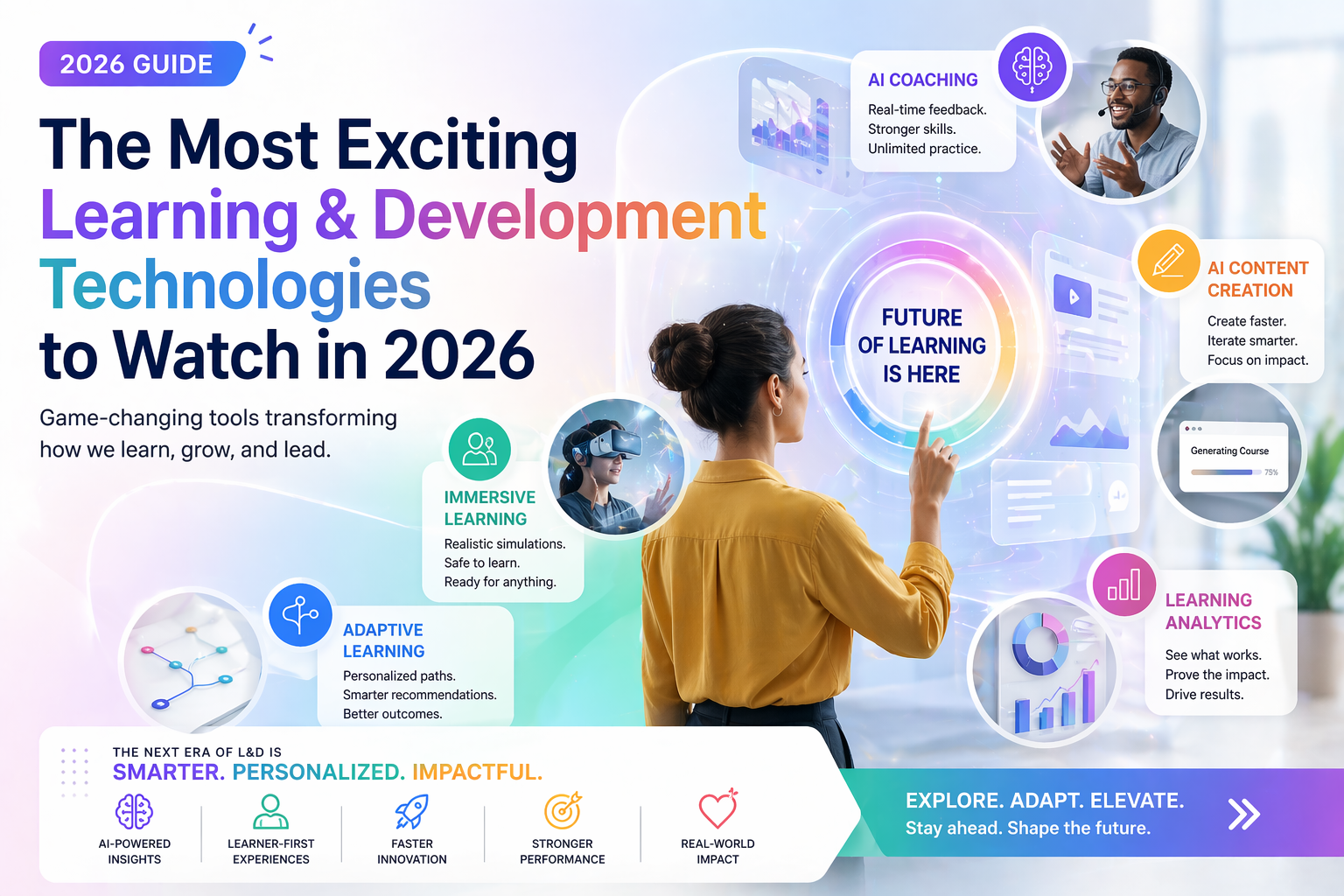
AI Coaching: From Learning Content to Skill Development
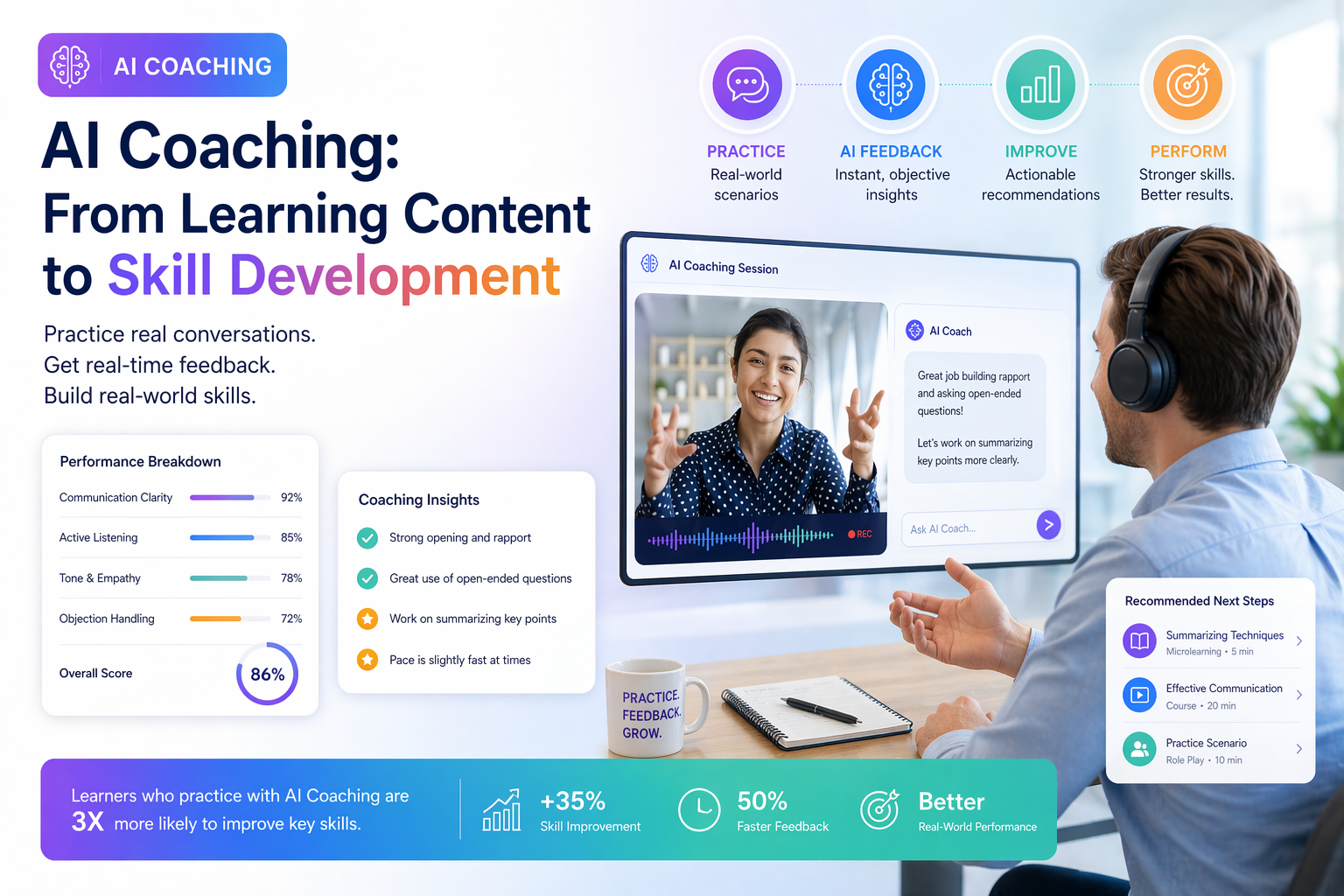
One of the most significant shifts in L&D is the move from passive learning to active skill development. AI coaching platforms are at the center of this transformation.
Instead of simply completing a course, learners can now practice real-world scenarios—such as sales conversations, leadership discussions, or customer interactions—and receive immediate, detailed feedback. This feedback goes far beyond right or wrong answers. It can include tone, clarity, pacing, word choice, and decision-making.
Platforms like Second Nature AI, Quantified AI, and Yoodli are making it possible for learners to improve through repetition without relying on a facilitator or subject matter expert.
What makes this especially powerful is the immediacy. In the past, reviewing performance required scheduling time, listening to recordings, and manually providing feedback. Now, that process happens instantly—and at scale.
This is not just a new tool. It represents a fundamental shift toward practice-based learning, where improvement happens through doing, not just consuming information.
2. AI-Powered Simulations & Immersive Learning
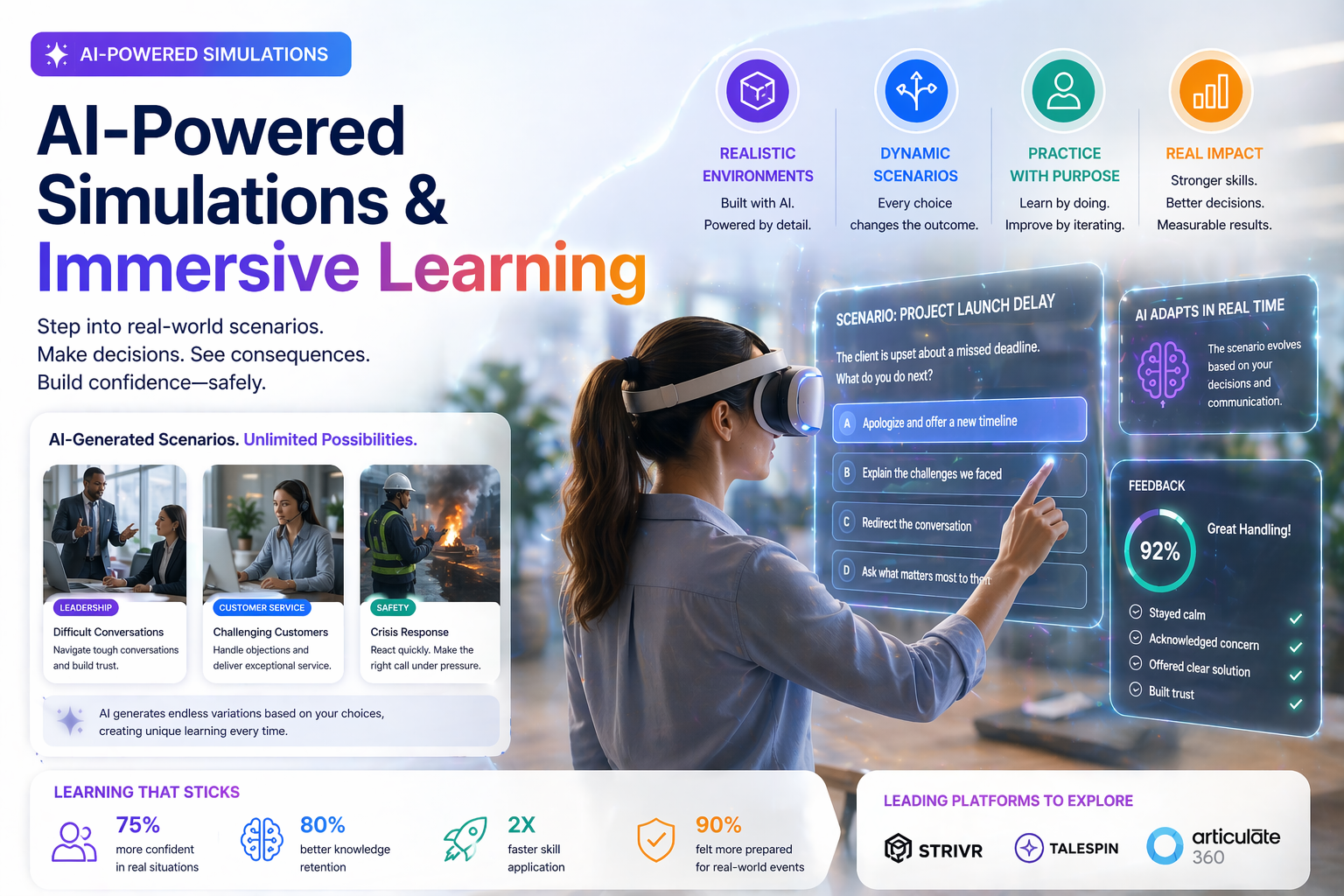
Simulations have always been one of the most effective ways to build real-world skills. What’s changing now is how those simulations are created and experienced.
Traditionally, simulations were static. Instructional designers would build a fixed scenario with predetermined outcomes. Today, AI is beginning to introduce dynamic, evolving scenarios that can change based on learner decisions.
Tools like Articulate Storyline 360, Talespin, and Strivr are enabling more immersive experiences, from branching scenarios to full virtual reality environments.
At the same time, AI-generated 360° environments are lowering the barrier to creating realistic training spaces. Instead of relying entirely on cameras or expensive production, designers can begin generating environments that place learners directly into the situations they need to navigate.
The result is a move toward experiential learning at scale, where learners can safely practice complex situations before encountering them in real life.
3. Adaptive Learning & Personalized Learning Paths
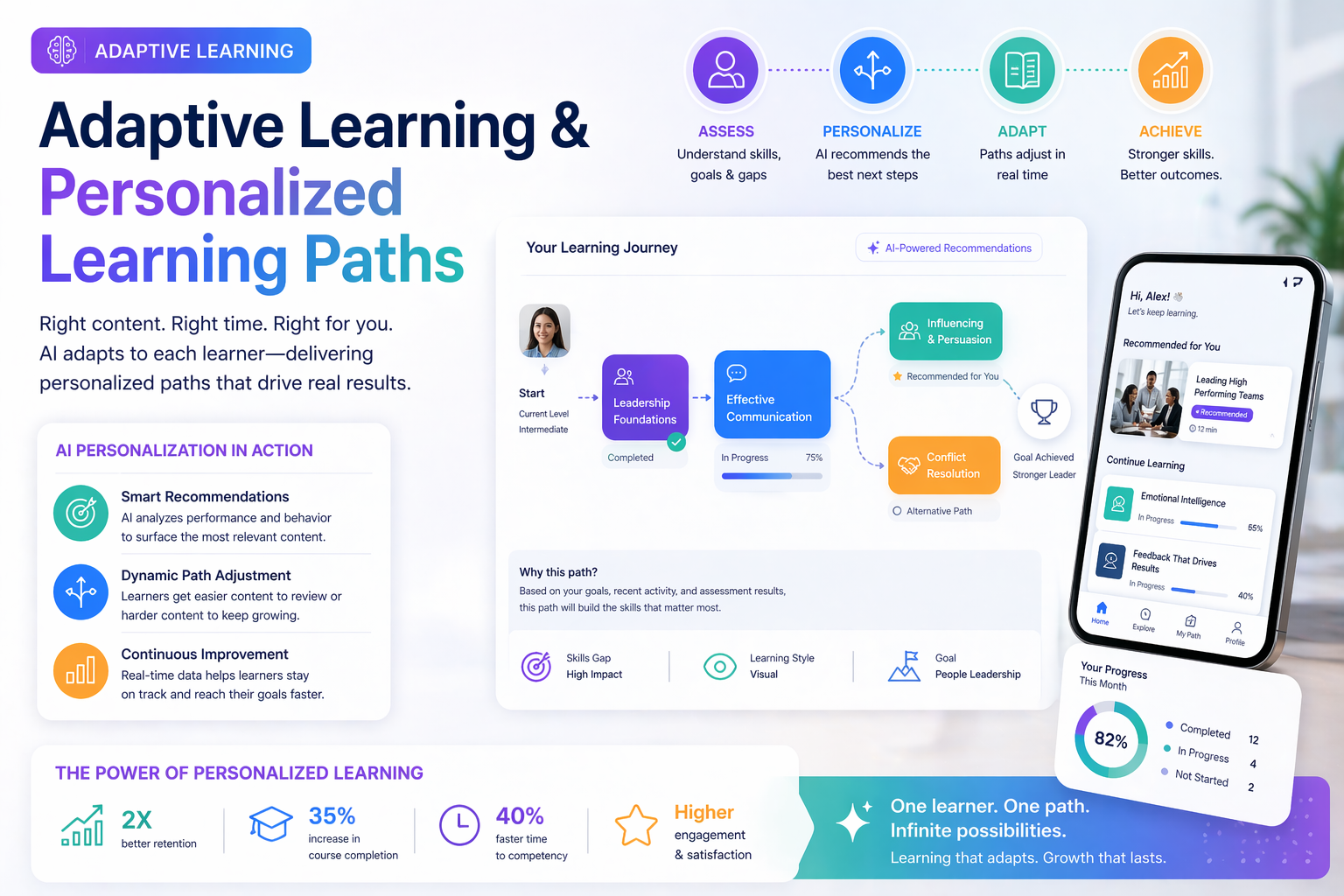
Personalization has long been a goal in L&D, but only recently has it become technically achievable in meaningful ways.
Modern platforms like Degreed, EdCast, and tools built into systems like Docebo are beginning to recommend content based on learner behavior, performance, and engagement.
However, it’s important to be clear: most LMS platforms still offer structured pathways, not fully adaptive ones.
True adaptive learning requires deeper infrastructure, such as:
xAPI tracking
A Learning Record Store like Learning Locker
Integration between multiple systems
When implemented well, adaptive learning allows organizations to move beyond one-size-fits-all training and toward individualized learning journeys. Learners who struggle with a concept can receive additional support, while those who excel can move forward more quickly.
This is where Learning & Development begins to overlap with learning technology strategy, not just course design.
4. AI-Powered Content Creation: Acceleration, Not Replacement
AI-generated content is often discussed as if it will replace instructional designers. In reality, its greatest impact is in accelerating the development process.
Tools like ChatGPT, Synthesia, and TalentLMS can generate drafts, scripts, quizzes, and even video content in a fraction of the time it used to take.
This allows L&D professionals to:
Rapidly prototype ideas
Iterate more quickly
Focus more on design, structure, and learner experience
The role is shifting from content creator to learning experience designer and strategist.
Rather than spending hours building first drafts, designers can now spend that time refining experiences, aligning content to real-world performance, and ensuring quality.
5. Learning Analytics & Skill Intelligence
While less visible than AI coaching or VR, learning analytics may be the most strategically important area in L&D.
Platforms like Eightfold AI and Workday are helping organizations move beyond tracking course completion and toward understanding skills, capabilities, and performance outcomes.
These tools allow organizations to:
Identify skill gaps across teams
Align training with business needs
Measure the real impact of learning initiatives
This is where L&D shifts from a support function to a strategic partner in organizational performance.
Final Thought: The Shift from Training to Performance
Across all of these technologies, a clear pattern is emerging.
L&D is moving away from:
Delivering content
Tracking completions
Standardized learning experiences
And toward:
Enabling practice
Delivering real-time feedback
Personalizing learning journeys
Measuring performance and capability
This is not a small evolution—it is a fundamental shift in how organizations approach learning.
What This Means for L&D Professionals
For those working in Learning & Development, this moment represents an opportunity.
The field is evolving from:
Instructional Designer
➡️ to Learning Experience Designer
➡️ to Learning Technologist
Those who can bridge the gap between learning design and technology will be best positioned to lead in this space.
The most exciting part is not just the technology itself—it’s what it enables.
For the first time, organizations can truly support learning that is continuous, personalized, and directly tied to performance. And for L&D professionals, that opens the door to creating learning experiences that are not only engaging—but genuinely transformative.
Explore More Articles